New, refurbished or used CNC spares: what to specify
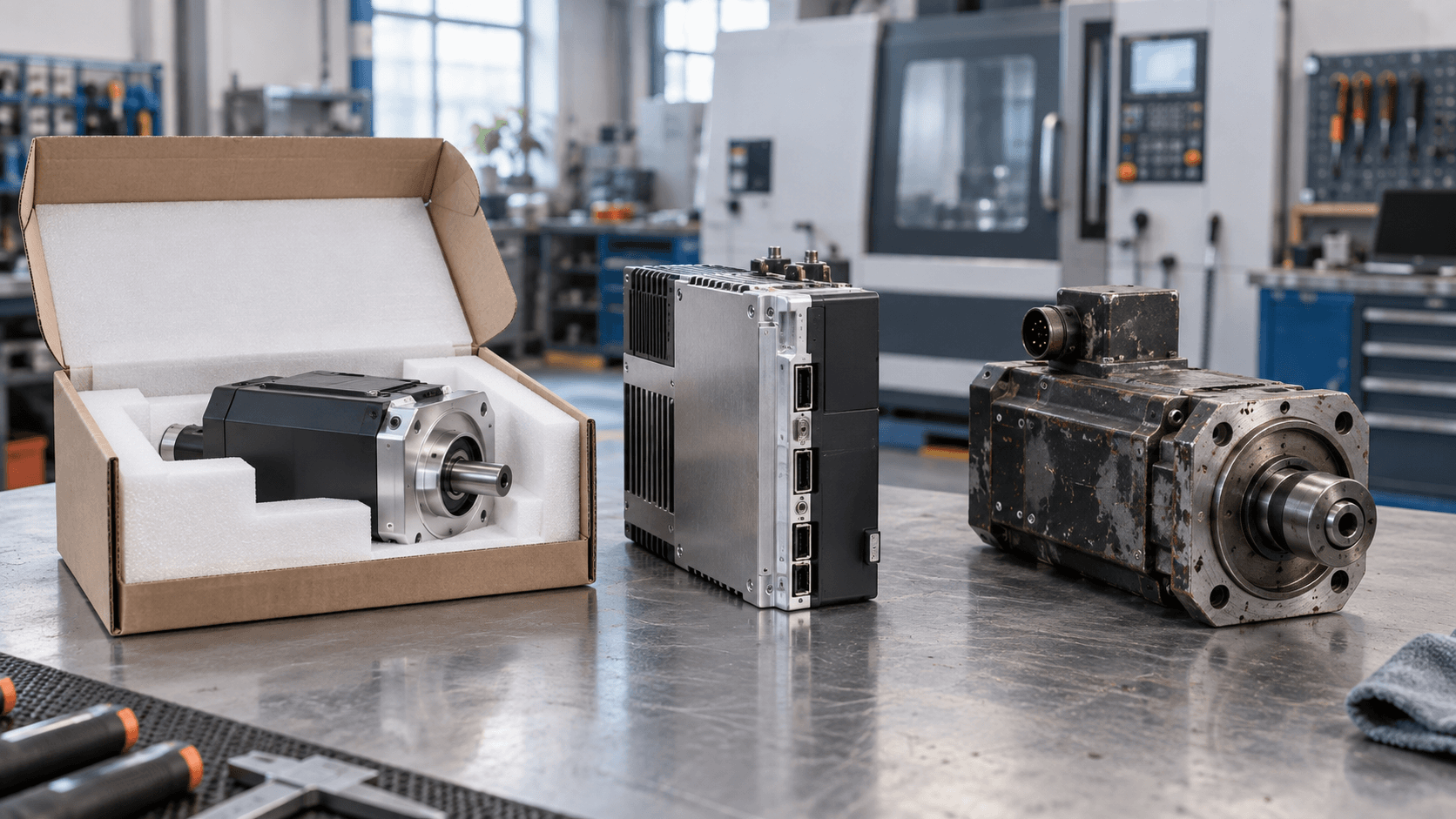
Condition is a commercial decision, not a quality one. Match the grade to how critical the machine is and how long you intend to keep it.
What the three grades usually mean
New means unused hardware — either current production or new old stock (NOS) that has sat unsold since it was made. Both are genuinely unused, but NOS carries an age consideration: electrolytic capacitors and batteries degrade on the shelf, not only in service, so a sealed unit from a long-discontinued family is not quite the same proposition as one made last quarter.
Refurbished means a used unit that has been through a defined process — inspection, replacement of wear items, functional test on a rig — and is sold with a warranty against that process. The value of the grade depends entirely on what the process actually covered, which is why it is fair to ask what was replaced and how it was tested.
Used means tested and functional, sold as-is beyond a short functional warranty. It is the cheapest and fastest route to a running machine, and for a great many boards and modules it is the only route, because nothing new has been produced for years.
Choosing by criticality, not by instinct
The instinct is to buy new for everything. The better question is what a failure costs. For a bottleneck machine running continuous production, the cost of a second outage dwarfs the price difference between grades, and new or properly refurbished is the rational choice — often alongside a used spare kept on the shelf as insurance.
For a machine with slack in the schedule, or one you plan to retire within a couple of years, a used unit at a fraction of the price is usually the correct commercial call. Buying an expensive new module for a machine that will be sold before the module has paid for itself is a common and avoidable mistake.
There is a third pattern worth naming: buy used to get running today, and place a parallel order for a new or refurbished unit as the permanent fit. Lead times on discontinued CNC hardware are measured in weeks; production stoppages are measured in hours.
Questions that separate a real grade from a label
Ask what the warranty actually covers and for how long — functional warranty against dead-on-arrival is not the same as a warranty covering failure in service. Ask what testing was done: powered on the bench, run under load, or run in a representative system. Ask whether consumables were replaced, specifically batteries, fans and any electrolytic capacitors on power sections.
For anything holding data — controls, memory cards, drives with parameter storage — ask what state it will arrive in, and confirm you can restore your own machine data onto it. A physically perfect module that will not take your parameters has not solved your problem.
Finally, ask about the return path before you buy, not after. Reputable suppliers in this market expect the question and answer it plainly.
How we grade
Every line in the cncspares.in catalog is tagged New, Refurbished or Used, with the specific condition detail, warranty term and lead time shown on the part page rather than buried in terms. Where a part is not on the shelf we will say it is source-to-order and quote the realistic lead time rather than an optimistic one.
If you are unsure which grade suits a particular job, say so in the quote request and describe the machine and its duty. It is a normal question and it changes what we offer.