What to include in an RFQ so you get an accurate quote
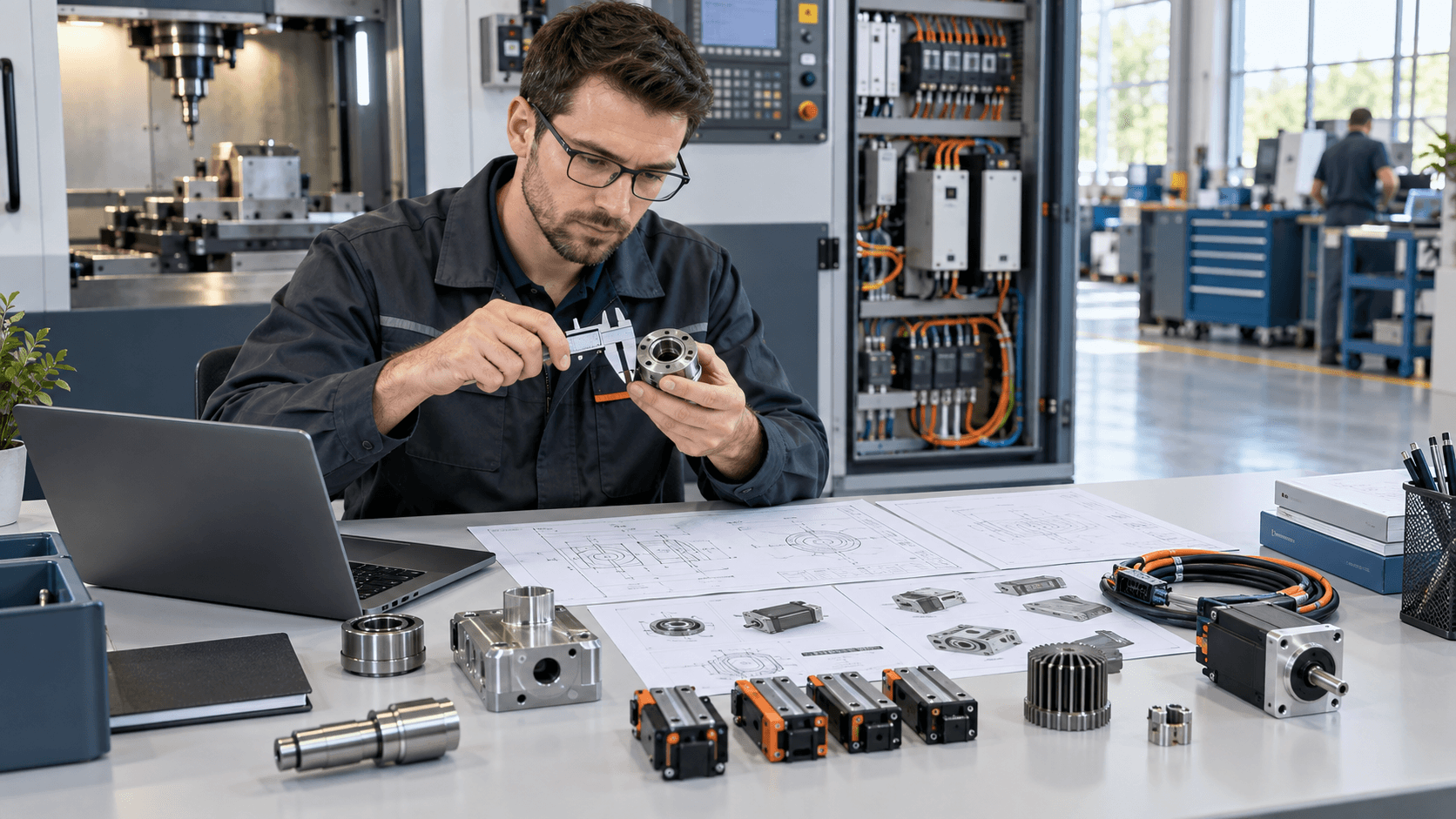
Most quote delays are caused by a missing identifier, not by a missing part. Six fields usually remove every round of clarification.
The six things that decide the answer
First, the manufacturer's part number exactly as printed — the Fanuc A06B-/A16B- specification, the Siemens MLFB, the Fagor part number — transcribed in full, including anything after the final hyphen. Second, the quantity, and whether it is one-off or a repeat requirement.
Third, the condition grades you will accept. 'New only' and 'any working unit' lead to very different searches, and saying which up front avoids being quoted something you would never buy. Fourth, how urgent it is: machine down today, planned maintenance next month, or building a spares shelf. Urgency legitimately changes what gets offered and at what price.
Fifth, the machine context — CNC series or control generation, machine builder and model. This is what lets a supplier catch an incompatible variant before it ships. Sixth, your destination country, because export handling and freight on drive hardware are not trivial line items.
Add the fault, not just the part
If you are replacing something because it failed, describe the failure and quote the alarm or error code the control displayed. This is not idle curiosity: in CNC systems the failing part and the alarming part are frequently different, and a supplier who has seen the same symptom fifty times may save you from replacing a healthy module.
Say what diagnostics you have already done — swapped with a known-good axis, checked the supply, reseated the feedback cable. It prevents a quote arriving with advice you have already tried, and it makes the exchange faster in both directions.
Photographs beat descriptions
Attach a clear photograph of the rating plate and of the unit as installed. Between them they settle variant questions, connector orientation, mounting and revision level in one step. Where a plate is damaged or missing, photographs are often the only route to an identification at all.
Where you have them, the machine's electrical schematic page or the spare-parts list entry is even better, because it gives the builder's intended part alongside what is physically fitted — and those occasionally differ after a previous repair.
Multi-line requests
If you are rebuilding a rack or stocking a shelf, send the whole list in one request rather than as separate enquiries. Freight consolidates, sourcing effort overlaps, and a supplier can flag where two of your lines are mutually incompatible — which is much harder to spot across three separate threads.
The RFQ form on this site takes multiple parts in one submission for exactly this reason. Add every line, then use the message field for the machine context and the fault description.